Showing posts with label A.V. Club. Show all posts

Sunday, May 31, 2009

Meaningful Ends


I came across a delightfully provocative article in the A.V. Club earlier today entitled A Meaning to an End, where the author, Noel Murray, discusses how important it is to consider how television series end. Murray makes the observation that:

At its best, TV can be as moving and artful as the best movies or the finest novels, but at the end of the day it's still an episodic medium that parcels out its pleasures, and that withholding is as much a part of TV art as performance or plotting.


I will not discuss Murray's keen insight into the medium of television. Rather, I would like to celebrate a recently concluded television show which, over the course of several years, has brought much joy to the Borra household. Au revoir, Scrubs! In lieu of flights of angels speeding you to your rest, let me commemorate your passing by posting a snippet of how elegantly you ended. Enjoy!

Tuesday, May 26, 2009

Dante and the Cosmos of Illumination


In an interview with the A.V. Club, Roberto Benigni enthused about his current project, TuttoDante, a one-man show about Dante Alighieri and The Divine Comedy. Interestingly enough, despite the fact that he never thought that his show would have an audience other than Dante scholars and 3rd year UA&P students taking Medieval Literature, he found himself playing to audiences of up to 10,000 people. Here are some excerpts from the interview:

Because Dante Alighieri has the most glorious imagination of modern poetry. So it’s talking about us, it’s concerning us. Everything in it conveys sentiment, emotions. He is really the greatest poet ever. So I am really very proud to present the shining pearl of Italian culture around the world. And also because Dante sometimes is very difficult and incomprehensible. But we need to talk sometimes about incomprehensible things. It’s very healthy...

...You don’t need also to understand Italian or to know Italian, because when Dante’s writing, when we recite Dante out loud, it explodes a cosmos of illumination like to recite music, a symphony. And it is very modern and ancient at the same time. It’s like a cross between Beethoven and Jimi Hendrix. Bach and Janis Joplin. It’s jazz, Duke Ellington, everybody, Wagner. It’s music.


The idea that The Divine Comedy is one of the finest examples of the ability of poesy to transcend simple apprehension is nothing new. My good friend, Paul Dumol, insists as much whenever he teaches Dante. But Benigni's wonderfully stilted exclamation "...when we recite Dante out loud, it explodes a cosmos of illumination like to recite music, a symphony" is worth reading through the entire interview.

Tuesday, May 05, 2009

Acquired Tastes: Chuck and Jeffster!


Now that I've seen the season and possibly series finale of Chuck, let me digress just a bit on the sheer awesome fun I had watching the show. Most of the people who follow my blog are, perhaps painfully, aware of my tendency to engage in deathly serious reflection on life, the universe, and everything. However, as most people who know me can attest, I'm not a deathly serious person. I'm just serious about squeezing as much fun and meaning out of life as possible. Why waste time on rubbish when one can also sift flowers from the rubble?

And so, Chuck. I won't even try to describe the joyful abandon to which I surrendered, fully, to the season finale. I won't even try to describe the impending heartache which greets the series' possible demise. What I will try to do is bring a smile to your face by showing what is possibly one of the funniest action musical montages in recent memory. Ladies and gentlemen, allow me to present Jeffster!


Just in case you have a heart, please save Chuck from cancellation. And for those who have been cruelly deprived of access to the season finale, here's a spoiler-rich summary from our friends at the A.V. Club.

Tuesday, March 18, 2008

Acquired Tastes: I Watched This On Purpose


Every once in a while, I have to fight the urge to be contrary, just because. This willful turn towards contrariness oftentimes rears its head in the face of critical commentary, or commentary that carries with it the snap, crackle and pop of especially active synapses struggling for synthesis. Mostly, I fight the urge to be contrary whenever critical opinion reaches some sort of consensus.

I think:

"What if all these experts and intellectuals were somehow wrong?"

Then, I gloat:

"Who's the smart one now?"

Josh Modell posits the same subversive slant in what is hopefully a series of short articles on movies that critics might have panned unfairly. Here are some excerpts:

We at The A.V. Club—writers and readers—are imperfect culture warriors, knowledgeable of what we should like and its relation to what we actually like, but even so, we aren't always impervious to the sexy allure of ostensible garbage. Sometimes—frequently, even—a movie or TV show will actually have cartoon stink lines emanating from it, yet we can't stop ourselves from seeing it. It's all about that kernel of hope, that faint possibility that this will be the one in a hundred that all the critics—and our own instincts—were wrong about. Thus is born I Watched This On Purpose, a new feature that will explore the impulse to spend time with entertainments that are unlikely to reward us in any meaningful way, or sometimes any way at all. It isn't a matter of getting to know your enemy, or even of discovering guilty pleasures, but of playing the long odds in hopes of a real reward. And a good time.


The first movie? The Timothy Olyphant starrer, Hitman. Good times!

And yes, Ate Cecile. The picture has nothing to do with the post. You love it anyway!

Monday, March 10, 2008

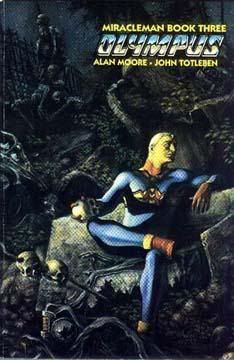
Acquired Tastes: Miracle Man


My last post on uber-nerd Gary Gygax opened up a whole can of lumbricus. Soon after ruminating on the legacy of the man after which natural 20s are going to be named (if the preceding clause made absolutely no sense to you, then you might as well skip this post as I will be sprinkling nerd-speak liberally throughout this entire entry), I came across A.V. Club primer on dystopian science fiction writer and comic book legend Alan Moore.

Miracle Man is one of those unfortunate masterworks which, due to the frustratingly endless legal battles over the ownership of the opus, might never be available for reading ever again. Yet it should be available to the general public. Without going into too much detail, because it is precisely the inspired selection of minutiae which makes reading Miracle Man a distinct joy, and without producing any samples to validate what follows (due to the aforementioned legal complications), I would like to recommend all mature readers to check it out.

How, pray tell? Well, there are torrents, and these files shared with among the many BitTorrent peer-to-peer networks might contain some miraculous finds. Enjoy!


Photo Credits:
Picture of Miracle Man comes courtesy of Wikipedia.

Thursday, November 08, 2007

Adaptations: Books and Movies


Our good friends at the A.V. Club have come up with a couple of lists that invite reaction. The first article lists down twenty good books that have been turned into, for the lack of a better word, crappy movies. The second article, perhaps in a concession to the exploring the spiritual dimension that sustains all entertaining movies, particularly the qualities of hope and grace, feature twenty one books that should be turned into movies. All in all, an excellent pair of articles that should provide much needed fodder for those otherwise lonely trips to the watercooler.

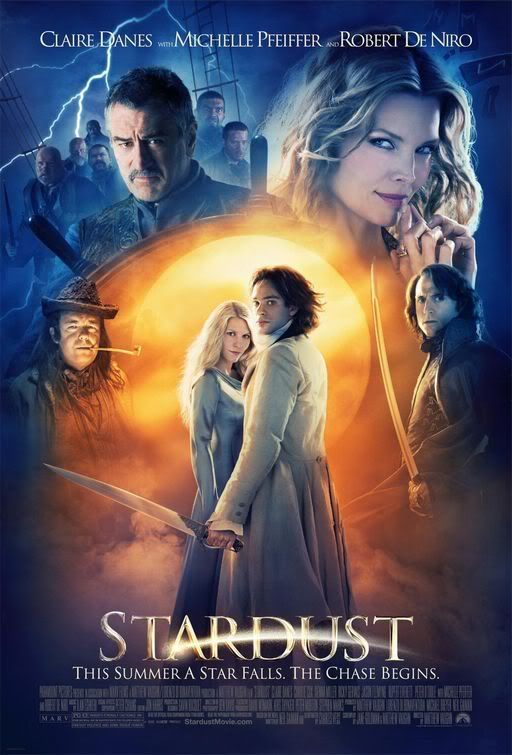
When I was younger, I really enjoyed Breakfast at Tiffany's, but while the ethereal Audrey Hepburn remains a timeless, incandescent angel, I cringe every time I hear Mickey Rooney's embarrassing Japanese caricature. I haven't caught Stardust yet, but if the best thing about the movie is that ham Robert De Niro's performance, then that's just sad. I have fond memories of what is, to my mind, Gaiman's sweetest prose work.

Photo Credits:

Stardust poster comes courtesy of Internet Movie Posters Awards Gallery.

Sunday, October 21, 2007

Seconds


I rarely try to organize my blog entries according to a particular theme, but my online friend The A.V. Club seems to have done the job for me.

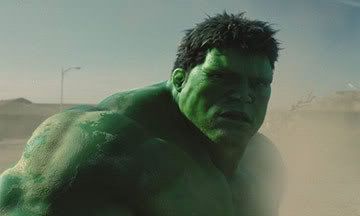
First, there is the lovely article For Your Reconsideration, which lists failures too ambitious and too promising to be forever forgotten. One such treat, which deserves revisiting, is Ang Lee's The Hulk:
Detractors weren't wrong when they assessed Ang Lee's foray into the realm of big-budget superhero movies as ponderous, slow, atmospheric at the expense of action, and more in love with its cineastic allusions to Alfred Hitchcock (via shots of golden San Francisco and a quasi-Bernard Herrmann score) than with its source material in old comic books. The objectors were wrong, however, when they wrote off such attributes as liabilities. Hulk's moody pacing has helped to sustain and bear out the film's mysteries over time, and even its most indulgent scenes—many marked by the conspicuous absence of a certain green character with big muscles and bad shorts—answer to a special kind of ambition.

Next, there is the delightfully harsh judgment which anchors When Comebacks Collapse: 10 Blown Second Chances. Case in point? John Travolta:
Practically the poster boy for blown second chances, John Travolta went from superstar lead of Grease, Urban Cowboy, Saturday Night Fever, and Staying Alive to has-been star of three Look Who's Talking movies, not to mention a bunch of forgotten '80s fare like Two Of A Kind and Eyes Of An Angel. Then Quentin Tarantino revived his cool rep with Pulp Fiction. For a brief and shining moment, Travolta was a star again, though in an uneven sort of way, with snazzy vehicles like Face/Off and Get Shorty blending weirdly with failed projects like the mopey, ill-conceived White Man's Burden and Michael. The less said about what's followed, from Battlefield Earth to Wild Hogs to his fat-suited, over-the-top crooning in Hairspray, the better. Remember when he was a sex symbol? Does anyone?

Lastly, there is the poignant reminder that things of startling beauty have a fragility or strength that makes them unbearably painful to witness. The article Not Again: 24 Films Too Painful To Watch Twice lists many such prickly treasures, such as Leaving Las Vegas:
It's been a long fall for Nicolas Cage, from celebrated Best Actor Oscar winner a mere decade ago to the star of Next, Ghost Rider, and (tee-hee, "How'd it get burned?") The Wicker Man. It's honestly hard to remember at this point what a revelation he was in his Oscar-winning role in Leaving Las Vegas, as a failed screenwriter pointedly setting out to drink himself to death. The film, written and directed by Stormy Monday's Mike Figgis, is more consciously polished and Hollywood-y than most of the films on this list, but it has much the same quality of unstintingly, aggressively delving into just how miserable human beings can get. It isn't enough, for instance, that co-star Elisabeth Shue is trapped in a degrading life as a Vegas prostitute. It isn't enough that her best friend is an abusive, suicidal drunk who seems content to drag her down with him. It isn't enough when she gets gang-raped, and subsequently evicted from her home by landlords clearly uncomfortable with the disreputable appearance of a bruised-up, limping rape victim. No, she actually has to get mocked and abused on her way home after the rape, as her taxi driver, noticing how gingerly she's moving, asks if she got "a back-door delivery you weren't expecting," then tells her she was asking for it by dressing the way she does. Only Figgis' glittery, somber direction and the leads' stellar performances turn this wallow in miserablism into something sadly poetic.


Of course, none of the aforementioned articles are light reading, in both senses of the term, but all have their merits. Enjoy?

Photo Credits:
Picture of The Hulk comes courtesy of The A.V. Club.

Friday, March 30, 2007

Acquired Tastes: The Way Of The John-D


I will never truly go on the record as being a child of the '80s and '90s, but I will go as far as expressing a more than academic interest in the popular culture commonly associated with that time frame. Following that vein, is there anyone who represents the '80s and '90s as completely as Patrick Swayze? Swayze either starred in, or played a pivotal role onscreen for the following movies: Youngblood, Dirty Dancing, Road House, and Ghost. Doesn't anyone find it even remotely interesting that Swayze, following an improbably glorious run of finding work in the aforementioned popular cult classics, simply vanished off the face of the planet after 1991?

Patrick Swayze is an interesting enough pop culture phenomenon to at least nudge the A.V. Club to begin an autopsy, er, inquiry into, if not his whereabouts, then his influence on the generation he meant the most to.

Noel Murray writes:

For a good long stretch in the late '80s and early '90s, Patrick Swayze was the go-to guy for Hollywood casting agents looking for a rugged action hero with heart and soul—deep, but not too deep. Whole websites and mini-cults have sprung up around Swayze's Road House character, a philosophy major with a Zen-like understanding of when to fight and when to "be nice." But Road House is just one tile in Swayze's mosaic of manhood. Below are some key quotes that outline how anyone can become the dancin'-est, truckin'-est, surfin'-est tough guy on the block. How to be, in essence, "The Swayze."


If only there was a need for the emergence of a thoughtful, mildly amusing, endearing, philosophically-inclined, but fundamentally happy teacher with abs that were used in the Spartan movie, 300, and the widest repertoire of cheesy power ballads from the '80s, '90s, and beyond: to wit, "The John-D". Now wouldn't that be an improvement on "The Swayze"? I'm thinking of turning off the comments for this particular post, by my faith in humanity prevents me from doing so. Any thoughts?

Picture of Patrick Swayze from Point Break comes courtesy of A.V. Club

Picture of Yours Truly need not be credited, because The John-D need only answer to himself.

Tuesday, March 13, 2007

Acquired Tastes: A.V. Club Features


The A.V. Club has an interesting feature entitled Inventory: 14 cover songs that are better than the originals. While most of their examples might seem unfamiliar (at least to these ears), their recommendations are generally well-thought of, and the comments posted by the A.V. Club readers provide an excellent source for referrals. Here are some choice recommendations from both the A.V. Club authors and some readers.

From A.V. Club:

The Mountain Goats, "The Sign"

Though he doesn't play it any more, Mountain Goats leader John Darnielle turned his interpretation of Ace Of Base's cheesy mid-'90s hit into one of the best covers ever performed onstage. There's a relatively straight version of it—with the programming replaced by an acoustic guitar, of course—on the Songs For Peter Hughes seven-inch (which was later included on the Bitter Melon Farm compilation), but when Darnielle played it live, he'd pepper it with the Swedish band's backstory. The result was beautifully hilarious, and not just because he could get a club full of hip indie kids to enthusiastically sing along to the chorus. Though Darnielle starts off the recorded version by saying "I never get tired of this song," he eventually eliminated it from his set list because, as he recently explained, "It sort of seemed like every indie band in the world had some pop staple they played for laughs. I really loved 'The Sign,' thought it was an awesome song, [and] didn't want anything to do with anything that might resemble liking something ironically."

From reader (come on), 5:12 PM Mon March 12, 2007:

all along the watchtower

by come on


i was really disappointed (but not particularly) surprised to see hendrix's "all along the watchtower" on this list. "searing and eerie" is an apt enough description of the dylan original, and i suppose the hendrix version is more "epic" but i don't think that makes it better.

"all along the watchtower" is a disquieting, apocalyptic song, but hendrix doesn't really seem attentive to that in his version. he turns it into a fist-pumping anthem, and it sounds like it doesn't really matter what words he's singing. his version may be louder and noisier, but dylan's is actually *scary*.

the truth is that however many people try, nobody does dylan better than dylan. there are plenty of serviceable dylan covers, but most of them tend to miss something about the original. dylan, despite all the knocks against his voice, was a great singer--for the simple reason that he always sounded like he *meant* it.

this, i think, is the real secret to great covers. this list's most glaring failure is the absence of any covers by johnny cash, and cash sang great covers because, like dylan, he always meant what he sang.

the best covers, though, find something in the song that nobody else knew was there to begin with, and cash did this better than anyone else, i think. U2's original version of "one" is intolerably preachy and overdramatic, but cash's graceful understatement make it deeply affecting. or, to take a different kind of example, look at the cover of "thunder road" bonnie prince billy did with tortoise. their version of the song is on a completely different emotional register than springsteen's, but it also sounds like something they found in the song itself.

All in all, a pretty good thread, and one that provided many new leads for me to download on Frostwire. While I don't have the time, really, to sift through all the reader suggestions, I would welcome the efforts of people who would (hint, hint).

Any other great covers out there?


Picture of Ace of Base comes courtesy of Jerzbear.
Picture of Johnny Cash comes courtesy by way of Amazon.