Showing posts with label Slate. Show all posts

Monday, September 29, 2008

Requiescat in pace: Paul Newman

While I try to get back in the groove of things, let me share with you a wonderful piece of writing that I came across earlier this morning by Dahlia Lithwick in Slate. Actor and philanthropist Paul Newman may have passed away, but his quiet service for humanity lives on in his Hole in the Wall Gang Camp:

Hollywood legend holds that Paul Newman is and will always be larger-than-life, and it's true. Nominated for 10 Oscars, he won one. He was Fast Eddie, Cool Hand Luke, Butch Cassidy. And then there were Those Eyes. But anyone who ever met Paul Newman will probably tell you that he was, in life, a pretty regular-sized guy: A guy with five beautiful daughters and a wonder of a wife, and a rambling country house in Connecticut where he screened movies out in the barn. He was a guy who went out of his way to ensure that everyone else—the thousands of campers, counselors, and volunteers at his camps, the friends he involved in his charities, and the millions of Americans who bought his popcorn—could feel like they were the real star.

Photo Credits:

Picture comes courtesy of Hole in the Wall Gang Camp.

Friday, July 06, 2007

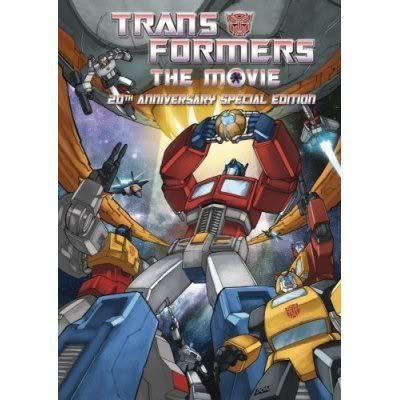
The Original Transformers: More than meets the Eye?


It's been some while since I posted anything in this blog, largely due to fatigue. I'm so tired right now that I don't even have the time to snarkily apologize to the dozen or so loyal readers not compelled by blood ties or need to read this blog.

At any rate, let me share an interesting article by Slate writer John Swansburg on Why the original Transformers movie is better than Michael Bay's, a title that will live on in my short term memory as one of the most artlessly, but laudably blunt feature articles ever to come from Slate writer John Swansburg on the original Transformers movie. While Swansburg has, as of this writing, yet to construct, even upon revision, a coherent argument regarding the merits of the original Transformers movie with the one by Michael Bay, I appreciate his insights on how the death of Optimus Prime in the former was a significant event for teenagers of all stripes:

Only in our wildest dreams did we think that the show might celebrate its liberation from network television by letting loose with a curse word. And only in our scariest nightmares would we have imagined that a mere 20 minutes into the movie, Optimus Prime, the most beloved of Autobots, would be killed by Megatron.

To use a phrase I learned the day I saw Transformers, "Oh, shit!" No one ever died in these shows. Even in G.I. Joe, a cartoon about a special U.S. Army strike force, no Rattler was ever shot down without the pilot first safely ejecting. But in the Transformers movie, the death toll was jaw-dropping. More than a dozen marquee characters are dispatched in the film, among them one of my personal favorites, Starscream, the Decepticon malcontent always scheming to relieve Megatron of his command.

Despite my poor understanding, at the time, of the even more gruesome reality of a media-generated wave of crass consumerism, I was genuinely touched by Prime's sacrifice, and was drawn in eagerly to the rather quaint storyline that detailed the Autobots' quest for a successor. Swansburg goes on:

It's funny to listen to the filmmakers on the DVD talk sheepishly about killing off all of those characters, Prime in particular. They genuinely regret it. But in watching the movie again as a grown-up, you realize that Hasbro's profit motive had the unintended consequence of forcing the movie to tell a much more sophisticated story than might otherwise have been possible. With Prime off to the great scrapheap in the sky by the end of the first act, the movie becomes one about finding a leader who can take on Prime's mantle and defeat not just Megatron, but also Orson Welles' Unicron, eating his way through the galaxy. And in a nice mythic twist, Prime's successor turns out to be an Autobot no one—not even Prime—thought it would be.

Despite the technological innovations that allow the spectacle that is Michael Bay's Transformers to become a reality, some people still prefer the mythic permanence of the water and ink stained cels in, funny enough, Orson Welles' Transformers.

Photo Credits:
Poster of The Transformers - The Movie (20th Anniversary Special Edition) (1986) comes courtesy of Amazon.

Thursday, June 28, 2007

Summer Movies and Eternal Questions


Slate has a wonderful feature on this year's Hollywood summer movies, which includes:

1. An almost-relieved Dana Stevens, who celebrates the return of brawny, '80s style action movies such as Live Free or Die Hard. I can understand how the all-too grim realities of severed limbs and faces reduced to so much hamburger hash can make one long for the indestructible heroes of yore. I will admit though that my tastes lean more to Willis' John McClane rather than Stallone's John Rambo, an inclination that is addressed partially by...

2. Eric Lichtenfeld, who joyfully dissects the evolution of McClane's classic one-liner, "Yippee Ki Yay Mo—." Licthenfeld insists that, and I apologize if, by way of quoting Licthenfeld properly, I offend anyone's sensibilities:


A quarter of the line (or half, depending on how you count) is profane, and yet "Yippee-ki-yay, motherfucker" is actually a delicate wisecrack. Underscoring the line's bridging of generations is the symmetry of its construction. On either side of the comma, past and present each get four syllables. This balance is manifested in the evenness of Willis' first—and best—delivery of the line. Subtly, he eases off "fucker," the word that, by virtue of its syntactical position, and its very nature, we might expect to land hardest on our ears. That Willis does not employ the same deftness in the sequels is a pity. The phrase is most effective not as a buildup to some hammer punch, but as one seamless unit of defiance.


3. Which leads us, in the disjointed, barely rational, associative way in which random items are strung along together to "mean" something, to Marisa Meltzer's observations regarding stoner movies, an article that sadly, receives more column space than...

4. Matt Feeney's remarkably lucid analysis regarding the misconceptions regarding loving masculinity and homoeroticism in movies. Feeney writes:

A good way of grasping how the claim of homoeroticism misfires sociologically comes from a more recent example: the Spartan blood bath 300. Critic after critic sneered that 300 was transparently homoerotic. Blogger Andrew Sullivan approvingly cited a (presumably gay) correspondent who wrote, "Everyone in the film is gay." Why? Because of those short shorts and all those exposed muscles. (The correspondent dug the movie because of the hot, sweaty men. Ergo, everyone dug the movie because of the hot, sweaty men. I hope the entanglement of this interpretation in a hermeneutic circle is obvious.)

Now, 300 has earned more than $200 million in America alone, from an overwhelmingly male audience. What more plausibly accounts for this? That 20 million closet cases snuck off to see an illicit fantasy about bare-chested men in Hellenic Speedos, or that young men from the vast heartland of this very conservative, Christian, pro-military country flocked to see an unabashedly heroic tale of Occidental, republican military glory? To believe the latter, all you have to accept is that, in imagining the sort of heroic figures they themselves would like to be, straight men would project onto them not just excellence but physical beauty. Shouldn't a guy be able to do such a thing without being called gay?


Photo Credits:
Illustration of Bruce Willis as John McClane is by Deanna Staffo.

Monday, June 04, 2007

Acquired Tastes: What Passes for Humor


It's been awhile since I linked to some items on the Web that made me laugh, which horrified me. I've always been a big believer in the redemptive qualities of joy, and the ability to laugh is precious. So sorry. If ever this blog degenerates into dour, unrepentantly serious whining without even the dim prospect of laughter on the horizon, you have my permission to spam me with products guaranteed either to bring back a lush head of hair, or improve my, er, "intimate relations". Wow, that sentence descended rather suddenly into stilted discomfort. At any rate, here's one from our friends at The Onion:

Unconventional Director Sets Shakespeare Play In Time, Place Shakespeare Intended

The Onion

Unconventional Director Sets Shakespeare Play In Time, Place Shakespeare Intended

MORRISTOWN, NJ—"When most people hear The Merchant of Venice, they think 1960s Las Vegas, but it's time to shake things up," said maverick director Kevin Hiles.


This one comes courtesy of Slate, and is labeled Church Sign Smackdown! You know you want to click on it. Who can resist clicking on something that promises such a tantalizing mix of the sacred and the profane? So, click!

Thursday, May 31, 2007

Helvetica and the Seduction of Art


In his faculty seminar talk entitled "Four Sketches", Dr. Jose Maria Arsenio G. Mariano posed the question: "At what point does the appreciation of beauty become seduction? How closely should the appreciation of beauty hew to sentimentality?"

Answering these questions, in themselves, seem to merit at least a three unit course on the Philosophy of Beauty: Exploring the Limits of a Study of Aesthetics in a Liberal Education Curriculum. Certainly they seem to validate America's current critical infatuation with the font type Helvetica, which has spawned an arthouse darling of a documentary entitled, confusingly enough (at least for the dozens or so people who regularly visit my blog entries or the several who actually click on the links I painstakingly provide for individual entries) Helvetica.

Slate explores the cult of Helvetica in a slideshow essay which you can get here, while also providing a review of authors and their favorite font types.


Photo Credits:

Picture of Helvetica comes courtesy of Wikipedia.

Saturday, May 12, 2007

Gibb 'Em a Chance!

When my wife and I visited her cousin Joana, who had just undergone surgery to repair her torn ACL, we managed to catch the episode of American Idol where we witnessed Idol contestant LaKisha Jones get eliminated from the competition. Despite her enormous talent, LaKisha was voted off the competition, largely because of her inability to properly interpret songs from the musical phenomenon that is the Bee Gees. As any videoke veteran will tell you, Bee Gees songs are notoriously hard, and not only because of the key it is sung in. It's just darned difficult. Slate writer Jody Rosen makes the case regarding The hidden complexity of the Bee Gees, observing that:

The truth is, nobody did very well this week, in part because Bee Gees songs are deceptively hard to sing. Blake called Gibb, "one of the pioneers of dance music," which gets it exactly wrong. Gibb is an old-fashioned song craftsman—a composer of beautiful, harmonically sophisticated pop songs who would have held his own back in the 1930s with Gershwin and Kern and company. This is the funny thing about the Bee Gees disco-era apogee: They were playing dress-up, shamelessly bandwagon-hopping, writing the same great songs that they always did, and tacking on a dance beat. They were disco manqué. LaKisha found that out the hard way, when she tried to navigate the tumbling octave drops in the chorus of "Stayin' Alive." No amount of gospel bluster was going help her pull that off —"Stayin' Alive" is a song, and it requires a singer.


While fans might argue whether or not LaKisha deserved to continue on (and my wife and I are inclined to believe so), one thing is sure: I'm listening to some Bee Gees.


Photo Credits:
Picture of the American Idol Final Four contestants comes courtesy of New York Magazine

Friday, April 06, 2007

Lenten Ramblings


At times, it is difficult to follow the tenets of the Christian faith, especially when it involves simple, everyday needs such as nourishment. As it is Good Friday, my participation in the Lenten Season involves fasting and abstinence, a practice which, I suspect, led Jessica Zafra to write the post entitled 28 Days Later, without the infectious zombies. It must be acknowledged though that Ms. Zafra is perfectly capable of making such suggestions with or without the aid of Lent, and that she makes sense, in a very "Damn, I have to rush to confession now" sort of way.

Despite my ravenous hunger, I found some articles on the Net that are worth considering, and not only because they are somehow related to the season. Through Slate's feature OTHER MAGAZINES, I was led to a rather thought provoking article on Robert Mugabe in The Economist. It reads, in part:


A more important relationship, however, may have been with Nelson Mandela. Some date the start of Mr Mugabe's misrule to the emergence of his rival as the great independence hero of Africa. Until Mr Mandela left his apartheid prison, in 1990, Mr Mugabe could do no wrong. He was feted as an anti-apartheid leader, a man who reconciled different races and presided over a shining economy. Mr Mugabe was the star of the region, but then the sun rose.

Mr Mandela promptly stole all his attention; South Africa's vastly bigger economy drew investment, press coverage, foreign plaudits. To Mr Mugabe's evident personal dismay, Zimbabwe was cast into the shade. Mr Mandela's biographer describes Mr Mugabe twitching with distaste and annoyance when the two men met, shortly after the South African won his freedom.

No love is lost between the two elder statesmen. Just as Mr Mandela emerged as the voice of reconciliation and modernity in Africa, Mr Mugabe reverted to populism, land-grabs and bashing foreigners. It is quite possible that Mr Mugabe, increasingly bitter, dreams of holding on to power long enough to see the back of some of his foreign rivals. He would love to be in office when (in the middle of the year, most probably) Mr Blair resigns. Mr Mbeki has only a couple of years to go. Mr Mandela's health is fading fast.

Essentially, the author is suggesting that Zimbabwe's plight under the despot Mugabe came about because of jealousy. Interesting.

On a lighter note (a phrase which caused me no end of consternation due to the frequency of its misuse in my students' papers on Dante's Comedy), here's a snippet from America's Finest News Source:

The Onion

Senator Forms Subcommittee For The Watching Of Lost

WASHINGTON, DC—Sen. Bill Nelson (D-FL) announced the formation of a new Senate subcommittee for the Watching of Lost and appointed...


"This subcommittee's mission is to promote viewing and discussion of this riveting ABC series every Wednesday night at my house," said Nelson, who lives alone, adding that membership on the subcommittee is open to both parties, requires no seniority, and is "fun." "In addition, I have been able to secure funding for two large pizzas and one two-liter bottle of Pepsi, and have every confidence that I can acquire more."

Sen. Nelson has asked all attendees to arrive on time, do their best to remain quiet during the show's airing, and stick around to discuss the plot and backstory for "as long as you want afterward."

Picture above comes courtesy of The Cathedral Church of Saint Peter in Exeter.
Monday, April 02, 2007

Sight Unseen Recommendation: Killer of Sheep


I try to avoid touting the virtues of films I have never seen, but two of my favorite reviewers, Dana Stevens of Slate and David Denby of The New Yorker have written glowing reviews in anticipation of the DVD release of Charles Burnett's Killer of Sheep. Denby's succinct, almost austere haiku of a review hints at pleasures to be savored, as he writes:

The film has attained legendary status, but it has never been released theatrically before, because of music-rights issues. Burnett used many kinds of African-American music on the soundtrack, and the movie itself has the bedraggled eloquence of an old blues record.

Stevens' review is more emotionally involved, and is charged with the experience of many remembered joys in viewing the film:

Seeing Killer of Sheep is an experience as simple and indelible as watching Bresson's Pickpocket or De Sica's Bicycle Thieves for the first time. Despite its aesthetic debt to European art cinema, Burnett's film is quintessentially American in its tone and subject matter. If there's any modern-day equivalent for the movie's matter-of-fact gaze on the ravages of urban poverty, it's the HBO series The Wire.

Killer of Sheep is a collection of brief vignettes which are so loosely connected that it feels at times like you're watching a non-narrative film. But each of these moving parts has a necessary function, and when the movie's brief 87 minutes are up, you want to watch the whole thing over again to see how they all fit together.

With such varied tones in expressing essentially delight at its impending release, this movie certainly seems worth seeing. I hope it makes its way to Philippine shores. Calling Joey Fernandez!

Picture comes courtesy of Jeroen Koolhaas, in The New Yorker.

Friday, March 30, 2007

Of Mansions and Marriages


When it comes to finance, I could hardly be called an expert; my financial acumen is roughly the equivalent of Homer Simpson's. But I came across some rather interesting articles in Slate that some numbers people might find interesting.

In his article entitled Haunted Mansion, Daniel Gross reports that according to a working paper titled "Where are the Shareholders' Mansions?" David Yermack of New York University and Crocker Liu of Arizona State argue that the bigger the CEO's mansion, the worse their companies' stocks perform.

Gross writes:

Yermack and Liu insist there's a solid academic reason to look through the keyholes. They want to figure out if a mansion purchase signals commitment or cashing out. A CEO who buys a 12,000-square-foot mansion could be showing his intent to stay for the long haul and to bust his butt so that he'll have the cash to pay off the huge mortgage. In which case, you'd expect stocks of the companies where the CEO just bought an obscenely large house to thrive. Buy!

Or the purchase of an absurdly large house could signal entrenchment: The CEO is too comfortable with his position and his personal finances. He has made so much money that he can't really be bothered with running the company. And the willingness to spend gazillions on a house—not to mention the furnishings, artwork, and baubles to fill it—betokens a general inattentiveness to costs. In which case, you'd expect stocks of the companies where the CEO just bought an obscenely large house to fare poorly. Sell!

Then, there's the relatively obscure William McAdoo, the man that Daniel Gross (again!) terms as The Unknown Financial Superhero. The most interesting part of this article deals with the convergence of skill, determination, and, for the lack of a better word, luck, which allowed McAdoo to well, do what he did:

Why did McAdoo triumph? Silber argues that it's because the former railroad executive, who had no formal economics education, thought like a businessman. He acted quickly and decisively, and focused on an exit strategy. Of course, McAdoo could not have succeeded without the support of President Woodrow Wilson, who happened to be his father-in-law. In March 1914, McAdoo had made one of the smartest career moves any executive can make: He got engaged to the boss's daughter.


Picture of Homer Simpson comes courtesy of Zapin.info.